Wounds that won’t heal, treated by a specialist.
For diabetic foot ulcers, venous leg ulcers, pressure injuries, and surgical wounds that have reopened. Board-certified in internal medicine, certified wound specialist, more than twenty years in practice.
Conditions we treat
Most of our patients arrive after a wound has failed to close on its own — often after weeks or months of dressing changes that haven’t worked. A wound that hasn’t improved in four weeks needs a different plan, not more of the same one.
Diabetic foot ulcers
Including wounds with exposed tendon or bone, and ulcers complicated by neuropathy or poor circulation.
Venous leg ulcers
Wounds around the ankle and lower leg from chronic venous insufficiency, with compression as the foundation of treatment.
Arterial & ischemic ulcers
Painful wounds caused by reduced blood flow, evaluated alongside vascular specialists when revascularization is needed.
Pressure injuries
Bedsores from stage 2 through stage 4, including patients in skilled nursing and assisted living.
Surgical wounds that reopen
Dehiscence, delayed healing, and post-surgical infections that haven’t responded to routine care.
Traumatic wounds & skin tears
Including injuries in patients on blood thinners or long-term steroids, where skin is fragile and slow to close.
Chronic osteomyelitis
Bone infection underlying a non-healing wound, managed with imaging, culture-directed antibiotics, and surgical referral where needed.
Radiation tissue injury
Wounds and tissue breakdown following radiation therapy, including osteoradionecrosis.
Lymphedema-related breakdown
Wounds complicated by chronic swelling, where the swelling has to be treated for the wound to close.
Not sure your wound fits any of these? Call 480-257-1950 and ask — we would rather tell you we are not the right place than have you wait.
Every wound gets a diagnosis before it gets a dressing.
That means finding out why this wound isn’t healing — blood flow, pressure, infection, nutrition, blood sugar, or something missed — and treating that alongside the wound itself.
- Debridement
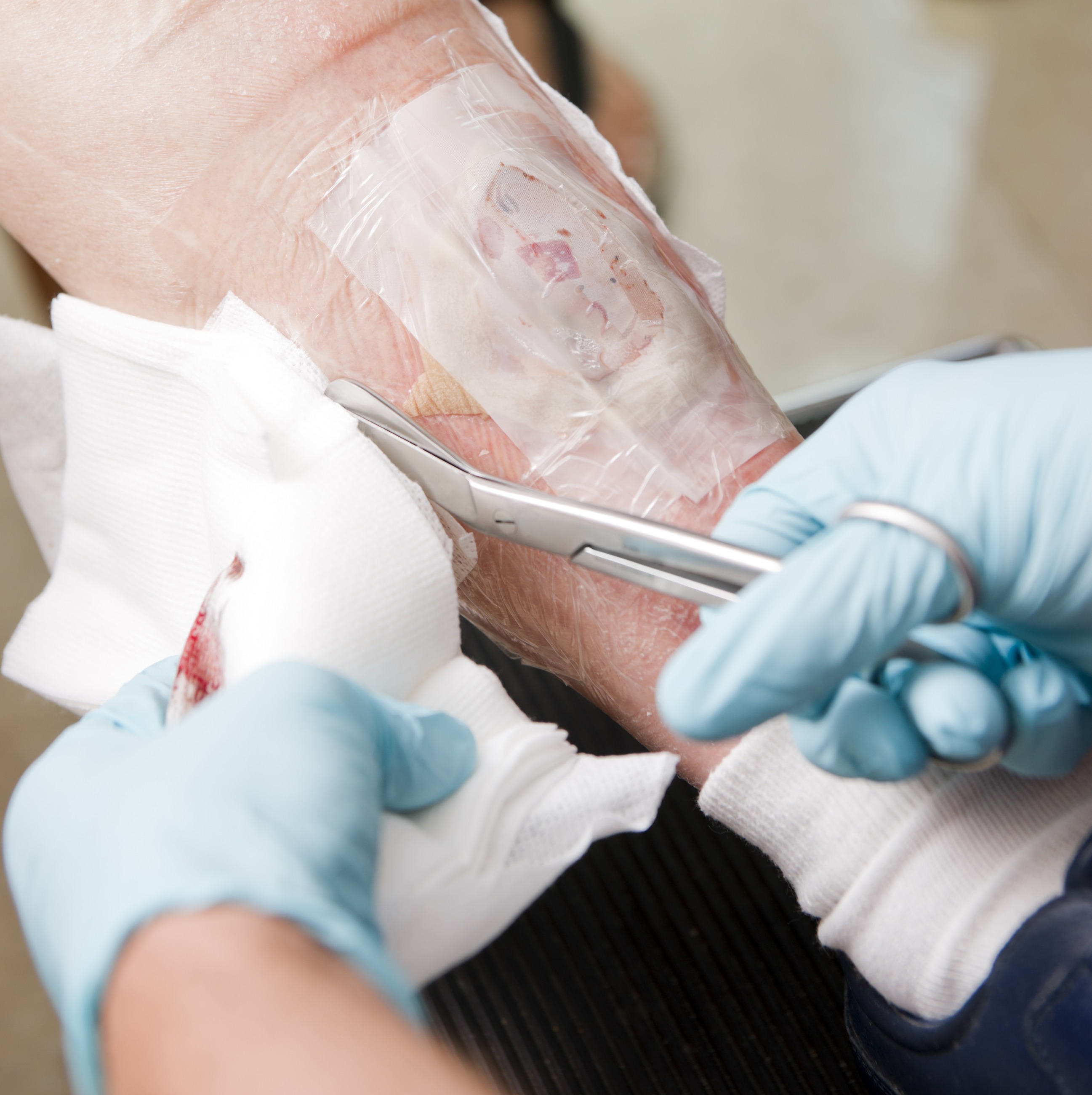
Sharp and enzymatic, in office - Advanced dressings
Matched to the wound, not the calendar - Skin substitutes & grafts
For wounds that have stalled - Negative pressure therapy
Wound vacs for deep or draining wounds - Compression therapy
Multilayer wraps and long-term garments - Offloading
Total contact casting, boots, footwear - Infection management
Cultures, targeted antibiotics, imaging - Vascular coordination
Arterial studies and specialist referral - Point-of-care wound imaging
Bacterial burden, tissue oxygen, and measurement
And the part most wound clinics skip. As a board-certified internist, Dr. Alonso also treats the blood sugar, nutrition, swelling, and medication problems that keep wounds open — not just the wound itself.
Three questions, answered at your visit.
Is the wound infected, does it have the blood supply to heal, and is it actually getting better? We image for all three at every visit — no needles, no dye, results in seconds. Most wound clinics do none of them.
Fluorescence imaging
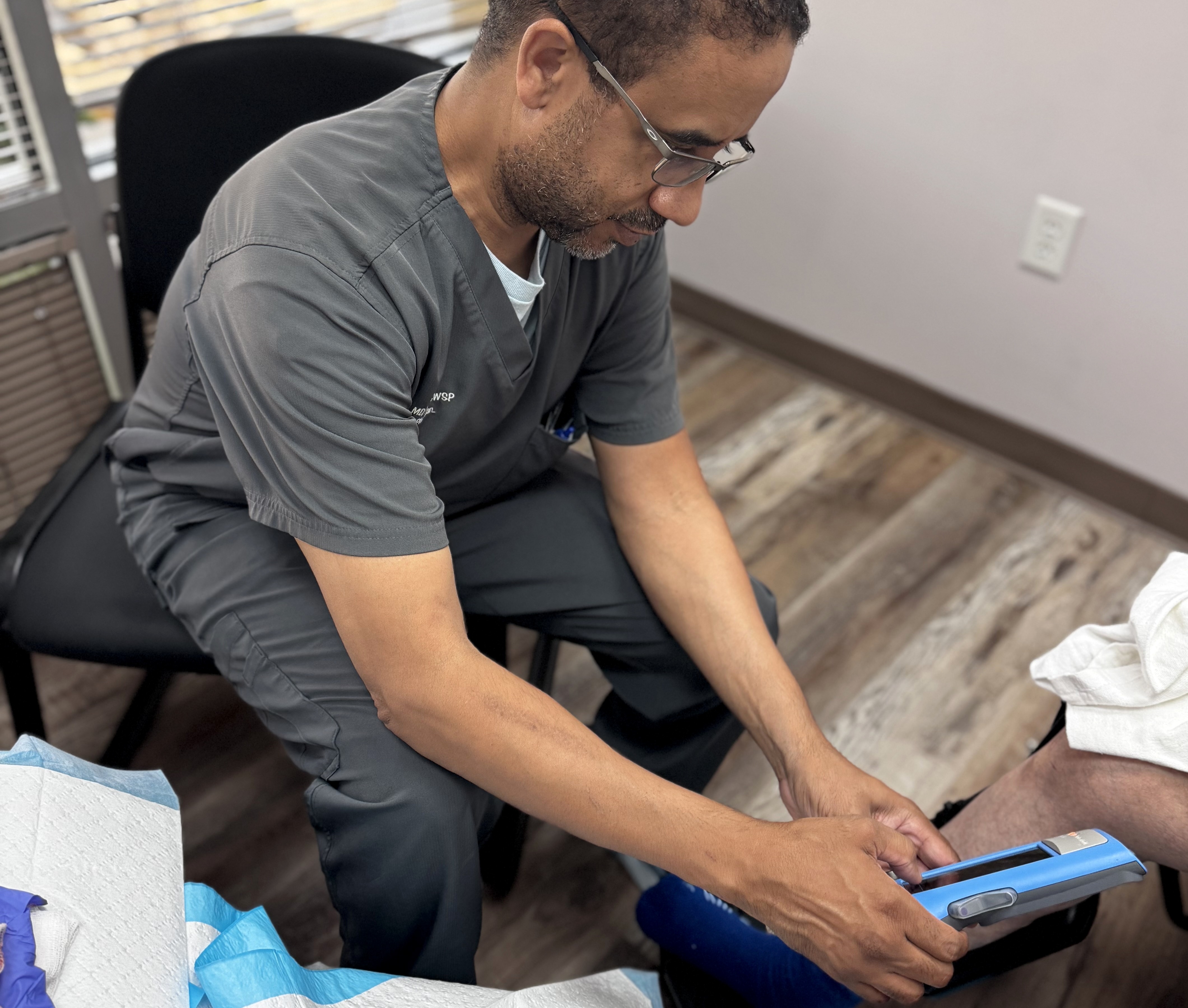
Under violet light, bacteria in and around the wound glow — so we can see where the bacterial burden actually sits rather than guessing from how the wound looks. That tells us where to debride, where to swab, and whether antibiotics are the right call.
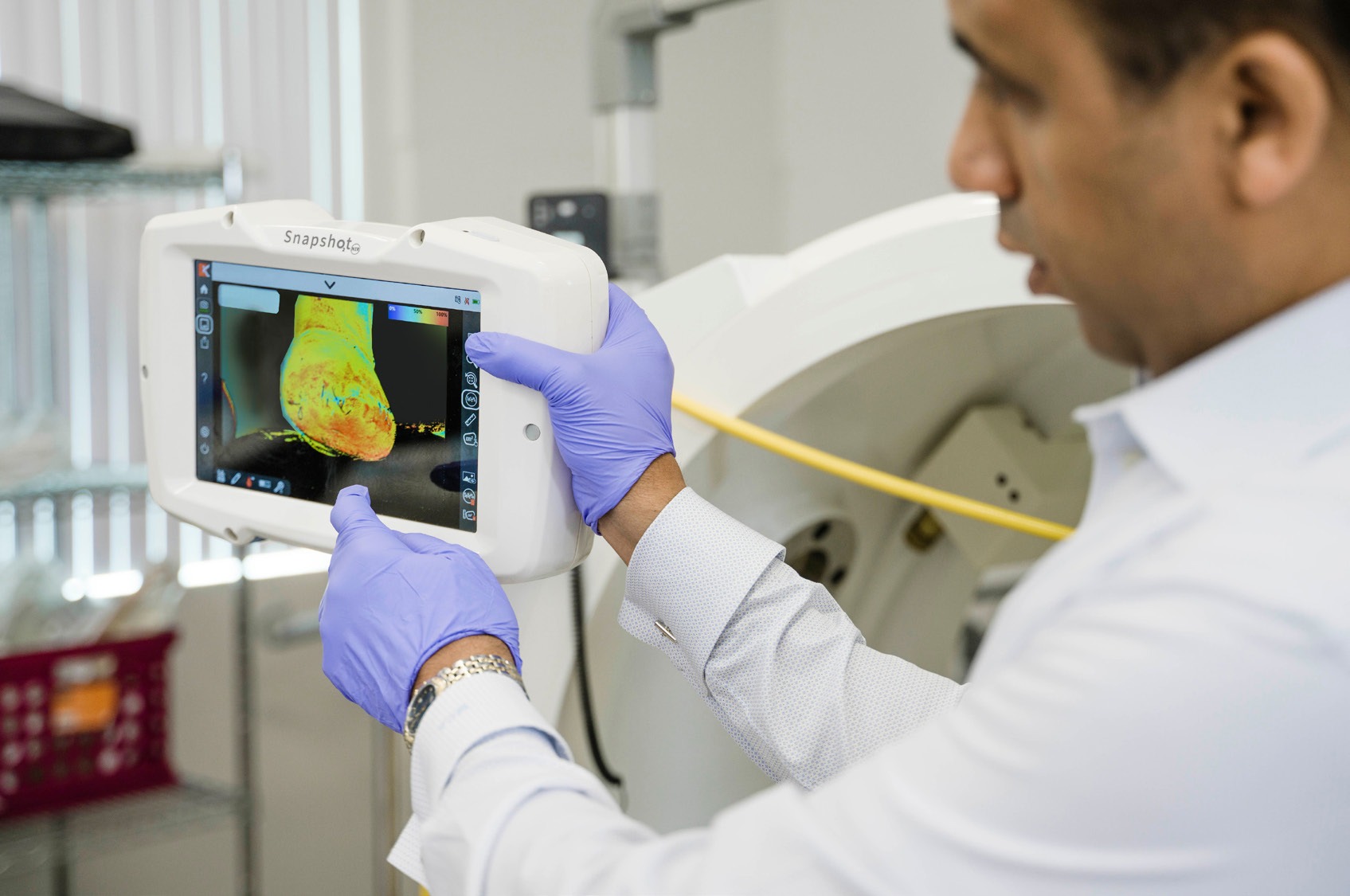
Near-infrared imaging
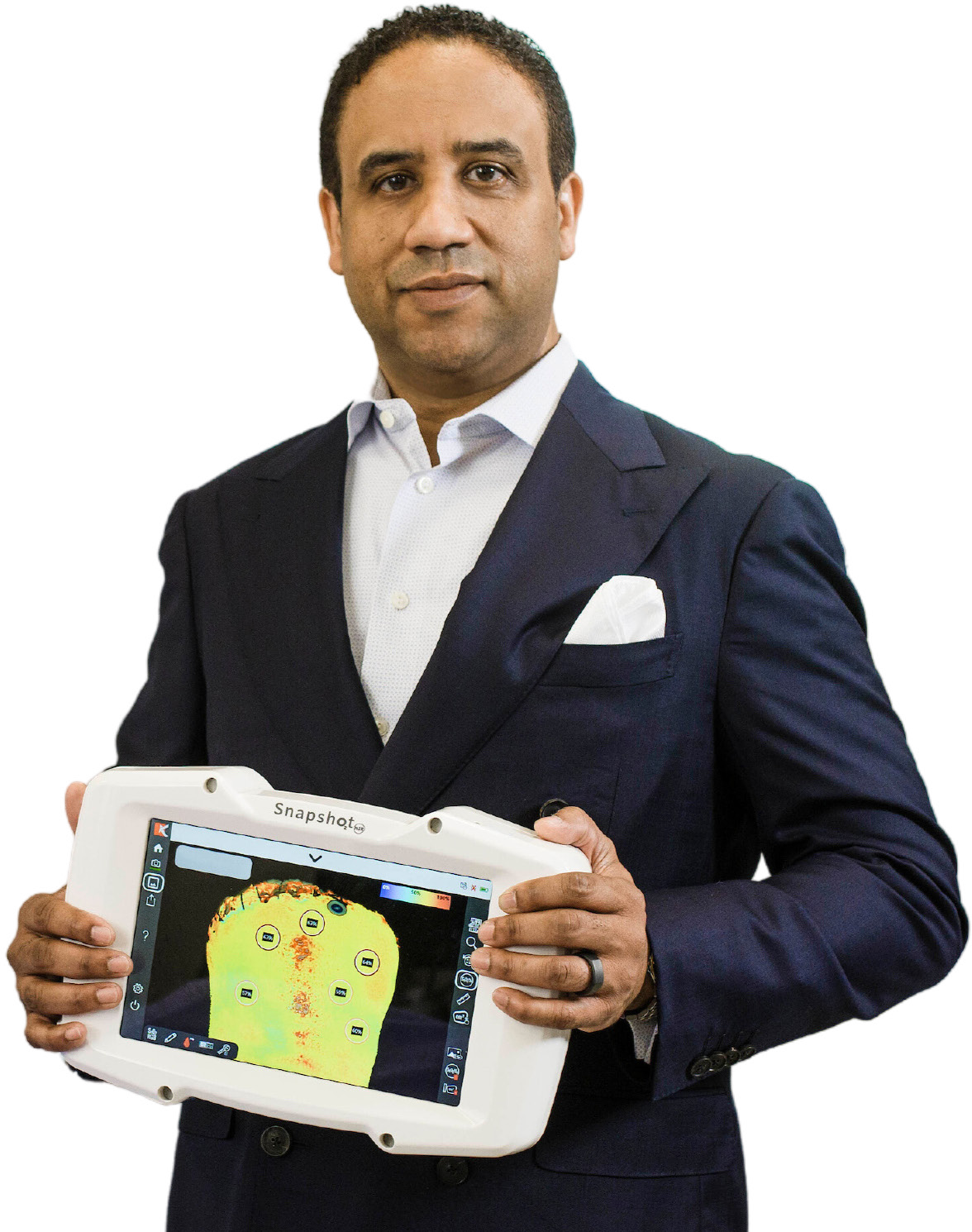
Near-infrared light measures how much oxygen is reaching the tissue around the wound. If circulation is the limiting factor we know early, and send you to a vascular specialist before more months are lost.
Digital measurement
Every wound is photographed and measured from that photograph, to the millimetre, at every visit. Progress stops being a matter of opinion — you can see whether the wound is closing, and so can your insurer.
All three, every patient, every visit. Together they answer the questions that decide the treatment plan — and they build a record. We can show you the change from one visit to the next, and show your insurer the evidence when a treatment needs authorising.
Near-infrared photograph courtesy of Kent Imaging.
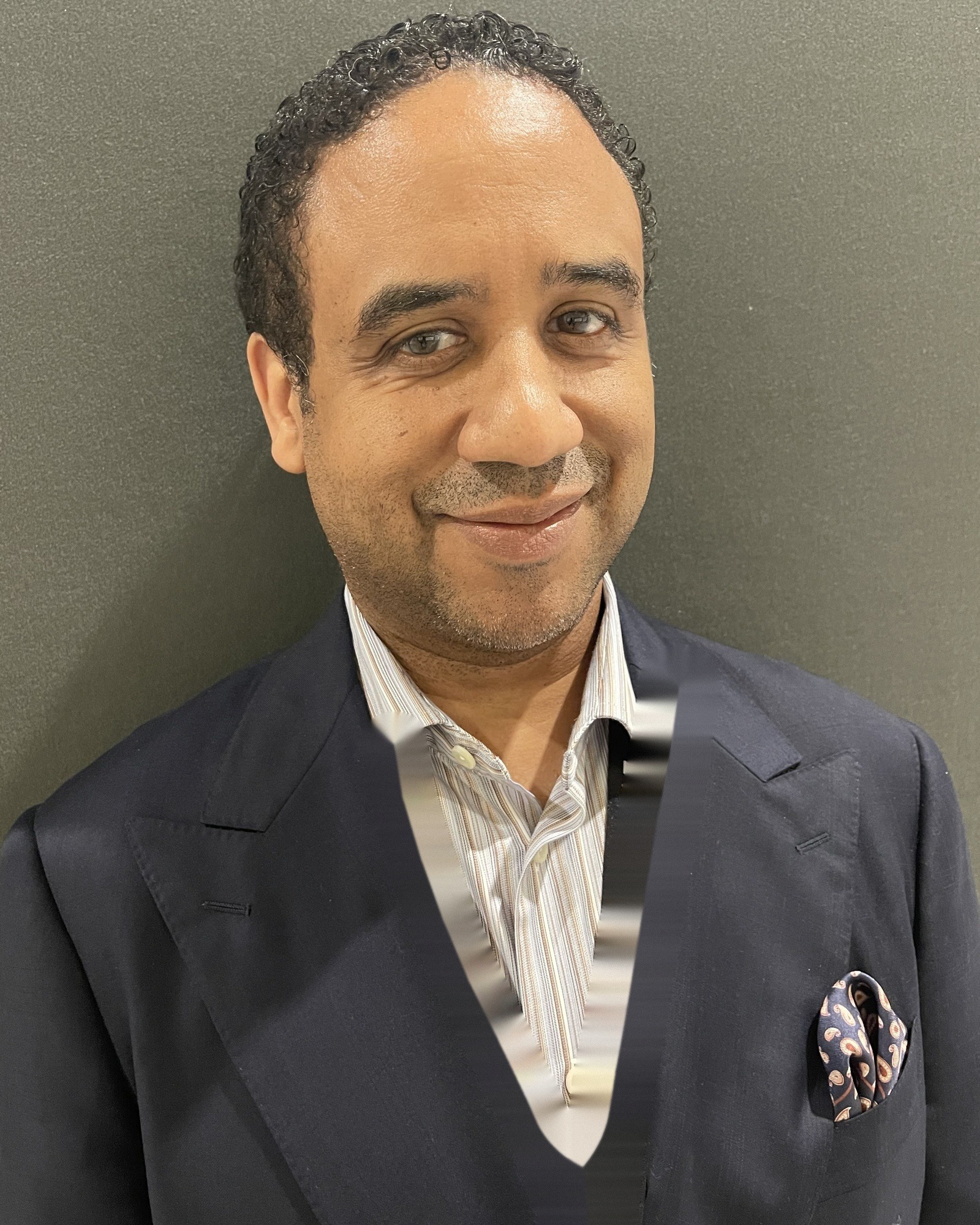
Misael C. Alonso, MD
Certified Wound Specialist Physician — a separate board certification in wound care
Fellow of the American College of Physicians and the American Professional Wound Care Association
Dr. Alonso has treated wounds for more than twenty years — in hospitals, in nursing homes, and in patients’ own living rooms.
He is both a wound specialist and an internal medicine doctor. That matters, because a wound that won’t close usually has a reason somewhere else in the body: circulation, blood sugar, swelling, or infection. He looks for that reason first.
He will explain what he finds in plain language, show you pictures of your own wound, and tell you honestly how long healing should take — in English or in Spanish.
Read full biography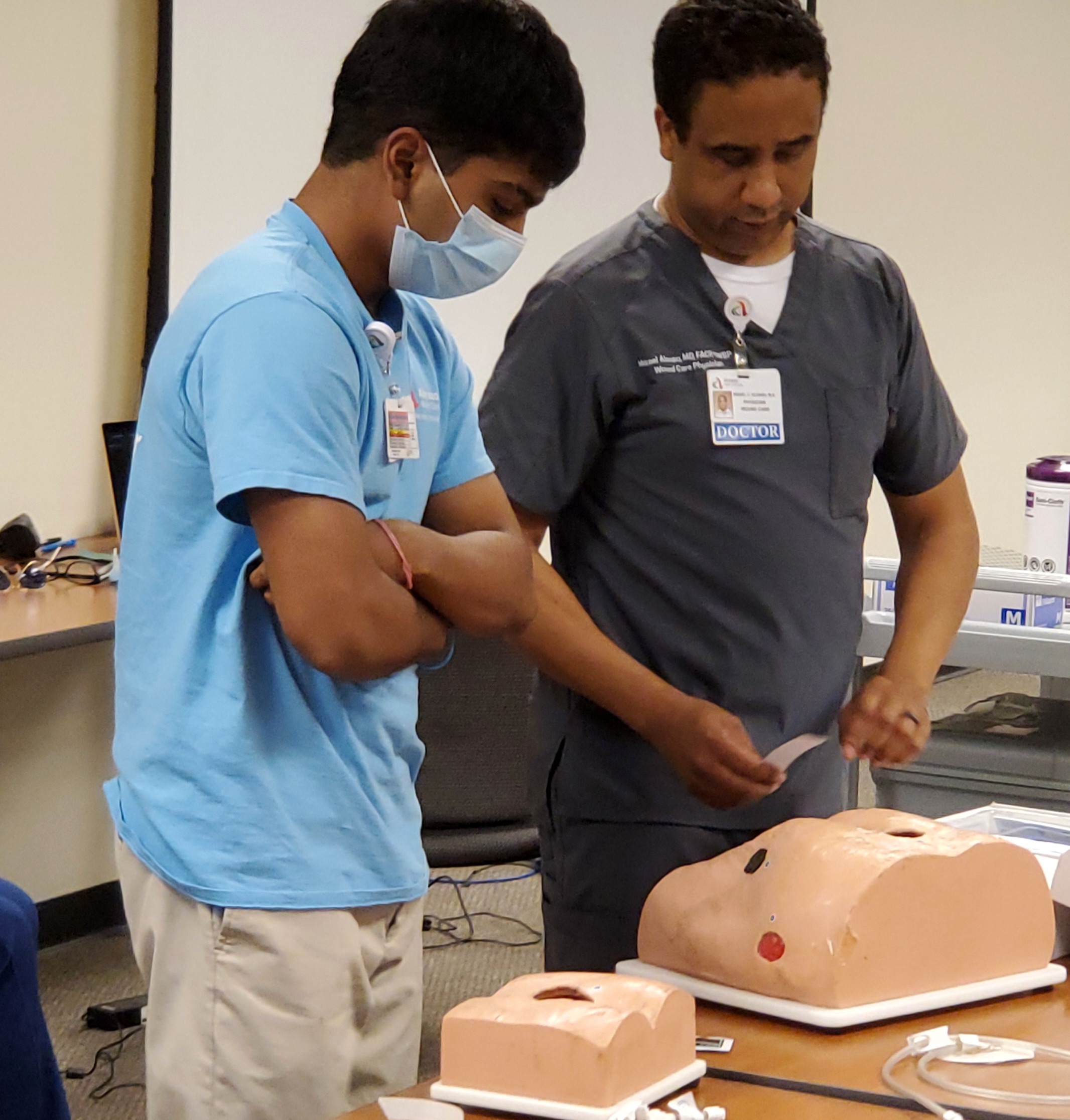
Teaching wound assessment to student ambassadors at Abrazo West Campus Medical Center.
Teaching the next generation
Dr. Alonso hosts wound care classes for the student ambassadors in Abrazo West Campus Medical Center’s summer volunteer program — high school students working out whether medicine is in their future. They learn wound assessment, dressing technique, and how thermal imaging shows what the eye can’t.
“Thank you, Dr. Alonso and the wound care team for hosting this class.”
Abrazo Health, on the summer student ambassador program
What patients say
“I cannot say enough good things about Dr. Alonso and his professionalism. He is very knowledgeable and genuinely cares about his patients. I was placed on a wound vac for a few months, which was not always a pleasant experience, but the support and care that I received from Dr. Alonso throughout the time made all the difference. I am very grateful for the care that I received and would definitely recommend Dr. Alonso to anyone needing wound care!”
“Extremely professional in handling my wounds and informing me of future care. Outstanding choice for wound care.”
Been treated here?
Reviews are how the next person with a wound that won’t close decides whether to call.
Is hyperbaric oxygen right for your wound?
Hyperbaric oxygen therapy can help certain wounds heal — and for many others it is an expensive course of treatment that won’t change the outcome. The useful question isn’t whether HBOT works. It’s whether it’s the right answer for your wound, right now.
Dr. Alonso evaluates whether hyperbaric therapy is appropriate, and when it is, refers you to a hyperbaric facility and manages your wound care alongside the treatment course. We don’t operate a chamber in our office — what we do is make the call correctly and coordinate the care around it.
- Diabetic lower-extremity ulcers that haven’t responded to 30 days of standard care
- Osteoradionecrosis and soft-tissue radiation injury
- Chronic refractory osteomyelitis
- Compromised skin grafts and flaps
Coverage rules are specific and insurers apply them strictly. Before any referral we’ll tell you whether your wound is likely to meet them.
What happens at your first visit
Plan for about 45 minutes. Dr. Alonso will take a full history, examine the wound, check circulation and sensation, and photograph and measure the wound for your record — so progress is measured rather than guessed at. Most patients leave with a new dressing already applied and a clear plan for the next two weeks.
Please bring
- Your insurance card and photo ID
- A complete list of your medications, including supplements
- The dressing supplies you’re using now — the actual boxes, if you can
- Recent imaging, vascular studies, or lab work, if you have copies
- Your referral, if your insurance requires one
- Compression stockings or wraps, if you use them
A few practical things
Wear loose clothing or shorts that let us reach the wound easily. If dressing changes are painful, take your usual pain medication about an hour beforehand. You can drive yourself home — nothing at a first visit requires sedation.
Save time at check-in
Complete your new patient forms before you come in and save about fifteen minutes at the front desk.
Handle it before you get here
Scheduling, check-in, and payment all work online through our patient portal and the healow app — so most of what used to mean a phone call or a clipboard in the waiting room doesn’t any more.
Schedule an appointment
Book, reschedule, or cancel without calling. You’ll get a reminder before the visit so it doesn’t slip.
Check in from home
Complete your forms, update your insurance, and confirm your medication list before you leave the house. Then walk in and sit down.
Pay your bill
View statements and receipts and pay online, any time — no need to call the office or post a cheque.
Everything above, on your phone
The free healow app puts scheduling, check-in, payments, lab results, visit notes, and secure messages to our office in one place. It also handles TeleVisits and can manage more than one family member’s account.
Free on the App Store and Google Play. Trouble signing in? Call 480-257-1950.
We accept most insurance plans
We verify your eligibility and benefits before your appointment, so you know where you stand before you walk in — not after.
Some plans also require a referral from your primary care physician. If you’re not sure, call and we’ll check that for you at the same time.
Have your insurance card to hand. We’ll confirm your plan, your referral requirement, and what you can expect to owe.
We see admitted patients too
Dr. Alonso provides wound care consultation for admitted patients across the Valley, and arranges outpatient follow-up in the Phoenix office so care continues after discharge — the point at which chronic wounds most often go backwards.
To request a consult, call 480-257-1950.
- Banner Estrella Medical Center
- Abrazo West Campus hospital
- HonorHealth Deer Valley Medical Campus
- HonorHealth John C Lincoln
Sending us a patient?
We accept referrals from primary care, podiatry, vascular and general surgery, endocrinology, home health, skilled nursing facilities, and group homes. New referrals are contacted within 48–72 hours.
Questions about whether a patient is appropriate? Call 480-257-1950 and ask for Dr. Alonso directly.
20033 N 19th Ave, Bldg 1
Ste 100, Phoenix, AZ 85027
- Monday, Wednesday, Friday9:00 AM – 5:00 PM
- Tuesday, Thursday9:00 AM – 1:00 PM
- Saturday, SundayClosed
For a medical emergency — heavy bleeding, fever with confusion, or redness spreading quickly up the limb — call 911 or go to the nearest emergency department. Do not wait for a call back.
We do not staff an after-hours clinical line. For a wound problem that can wait until morning, send a message through the patient portal and we will answer during clinic hours.
Phoenix, AZ 85027
A single-level building — no stairs and no elevator to manage. Parking is directly outside the entrance and along the side of the building.